

The Savana That Enchanted Brazil: The Sound Created by José Roberto Branco – Maestro Branco


With a serene demeanor, always smiling and welcoming in every conversation, this was José Roberto Branco (1938–2025), known to many as Maestro Branco. His work stood out for its singular musical language, the result of combining research in jazz, Brazilian music, classical music, twentieth-century contemporary music, as well as Jesuit and African traditions. Through his arrangements, he created a unique, striking, and enchanting sound, appreciated by musicians both in Brazil and abroad. He collaborated with artists such as Raul de Souza, Jair Rodrigues, Wilson Simonal, and Toquinho, among others.
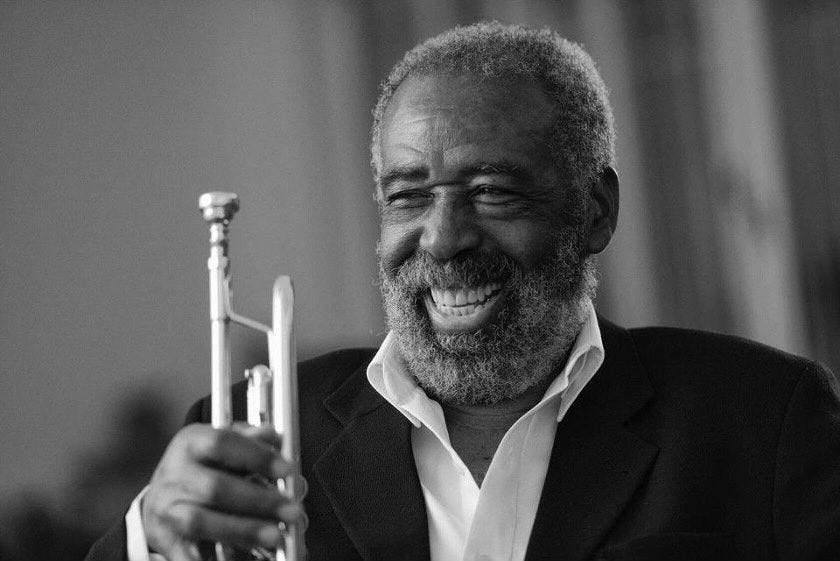
However, his most important legacy was the creation of the iconic Banda Savana. The project had a clear objective: to compose Brazilian instrumental music. Initially, the band was not formed as a big band but as a smaller ensemble in the jazz combo format, with three saxophones, three trumpets, two trombones, and a rhythm section composed of piano, guitar, double bass, drums, and percussion. During this period, the group explored music influenced by North American jazz and funk while incorporating Branco’s early experiments with Brazilian music arrangements.
After the first formation of Banda Savana ended and a brief hiatus, the insistence of some musicians to continue the project led to the creation of a full big band. It was then that Maestro Branco initiated one of the most remarkable events in Brazilian instrumental music: the formation of a big band dedicated to blending different influences with the goal of performing exclusively Brazilian music in an instrumental format.
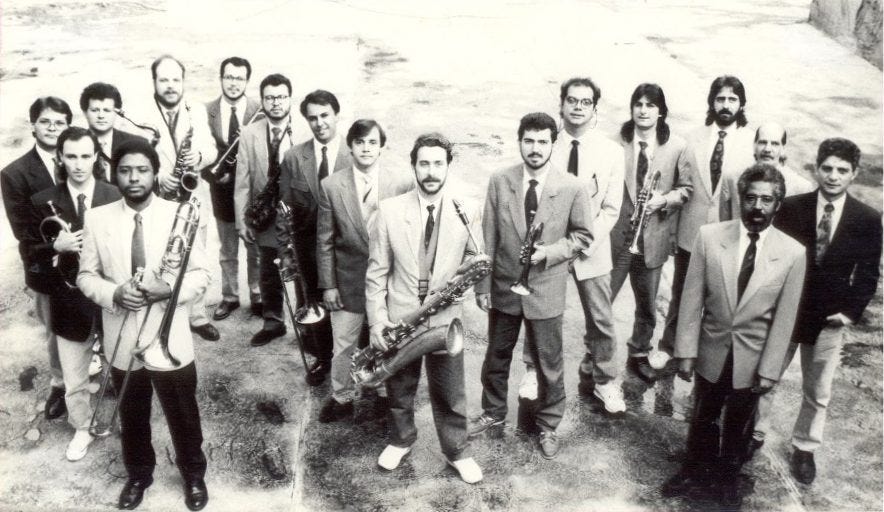
The two albums recorded by Banda Savana—Brazilian Movements (1990) and Brazilian Portraits (1992), released by the Danish label Libra Music—feature arrangements by Branco that impart a unique identity, becoming a reference for Brazilian big bands. With a new and experimental approach to harmonization, combined with intense rhythmic vigor, Banda Savana established itself as a model for groups that emerged in Brazil in the 1990s and into the new millennium, remaining today as one of the main representatives of this style in the country.
The first album, Brazilian Movements (1990), opens with the track “Consolação” by Baden Powell. From the very first piece, one can identify the distinctive sounds and characteristics of Maestro Branco’s writing: rigorous rhythm section, specific voicings for piano, guitar, and double bass, detailed writing for drums, and the inclusion of complementary instruments such as the flute, used as a lead and solo instrument in the arrangement. Also notable are the riffs and the density of the big band tuttis, always emphasizing the lead trumpet function—Branco’s primary instrument, which he mastered with excellence.
Throughout the album, other sounds emerge: A.C. Jobim’s baião in the track “Stone Flower,” orchestrated and reharmonized for big band, reinforcing Branco’s dense yet elegant style; and “Sambita,” an important standard by Puerto Rican group Mongo Santamaría, composed by J. Gellardo and J. Almario. In this arrangement, Maestro Branco demonstrates his interest in other cultures, creating an interpretation that blends Caribbean music, jazz, and Brazilian music, with a standout performance by saxophonist Vinícius Dorin, in addition to voicings that combine quartal openings and influences from his post-tonal studies with Hungarian composer Hans Joaquim Koellreuter. Other tracks—“Festa para um Rei Negro,” immortalized by Jair Rodrigues’ voice, “Disparada,” the standard “Bebê” by Hermeto Pascoal, and “Vomimbora,” composed by Magno Bissoli, one of the band’s first members—reveal the full versatility and richness of Maestro Branco’s big band writing, solidifying him as one of the greatest Brazilian arrangers of all time.
Regarding the album Brazilian Portraits (1992), which brings together compositions by Maestro Branco himself, Moacir Santos, Heitor Villa-Lobos, Vinícius Dorin, and Elias de Almeida, I leave it to the reader to experience and feel the fusion of different elements and styles, always guided by Maestro Branco’s enlightened hand—an inspiration that will continue to influence musicians and arrangers fortunate enough to hear it.
The post The Savana That Enchanted Brazil: The Sound Created by José Roberto Branco – Maestro Branco appeared first on ASMAC.
 | A guest post by
|